Album or Playlist for a Long Listen?
Album or playlist for a long listen? Build a week of listening around the attention you want, from following an artist’s sequence to setting a mood.
The common mistake in choosing an album or playlist for a long listen is treating them as interchangeable piles of music. The cost is subtle: an album can become background before its sequence has had a chance to register, while a playlist assembled for a particular mood can lose its thread when the mood shifts. A simple week-long routine makes the choice clearer by asking what kind of attention you want from each session.
Choose the kind of attention
An album places a listener inside an order chosen by its maker. A song may introduce a sound that returns later, or a quieter passage may make the next track feel more forceful. Listening in sequence lets those relationships build, even if you do not know the artist’s intentions.
A listener-made playlist puts the emphasis elsewhere. Its tracks can be selected to sustain a mood, connect different artists, or move through a personal theme. You control the order, and you can revise it as your purpose changes. That freedom can make a playlist feel responsive, though it also makes the listening experience depend on the choices holding it together.
Neither format demands a particular level of concentration. You can listen closely to a playlist or let an album accompany routine work. The useful distinction is what each arrangement makes easier: an album invites you to notice relations within one work; a playlist invites you to shape a path across tracks.
Set a week’s rhythm
Use the week as a light plan, not a rule. Choose sessions that already have a place in your routine: a walk, cooking, a commute, or a stretch of quiet at home. The aim is to notice how the same available time feels when the music is arranged differently.
- Monday, before choosing: Name the sort of listening you want in plain terms. You might want to follow an artist’s choices, keep a steady mood, hear familiar songs in a new order, or find a soundtrack for a particular activity.
- Tuesday, album session: Pick an album whose full sequence interests you, rather than choosing only by its best-known track. Start at the beginning and leave the order intact. Notice where your attention settles, drifts, or returns.
- Wednesday, playlist session: Choose or make a playlist for a clearly bounded purpose, such as music for a walk home or a quiet stretch of reading. Keep the reason for the selection in mind, and observe whether the changing artists and sounds support that purpose.
- Thursday, repeat one format: Return to the album or playlist that suited you better, but in a different ordinary setting. This helps separate a format’s appeal from the circumstances of one session.
- Friday, try a different order: If you made a playlist, rearrange a few tracks to alter its opening or its transitions. If you chose an album, listen to a track that stood out again, then return to the full sequence when convenient. Notice what the order contributes.
- Weekend, choose freely: Select the format that fits the attention you actually have, not the attention you think you ought to have. A relaxed repeat can be more revealing than forcing a concentrated listen into a crowded day.
Keep the plan flexible. If a session is interrupted, resume when it suits you; there is no need to turn listening into an obligation. The comparison works through small observations, not a complete record of every reaction.
Notice sequence and mood
During an album session, listen for connections rather than searching for a hidden message. Does one track seem to answer a sound or idea from an earlier one? Does the transition into the next track change your sense of the music? These are observations about your listening, not claims about what the artist intended.
During a playlist session, notice how its edges work. The opening track sets an expectation; later choices either deepen it, gently redirect it, or break it. A playlist can move between styles and eras while still feeling coherent, but its coherence may come from your own theme rather than from musical similarity.
Think of the sequence as a row of objects on a shelf: the objects remain the same, but their neighbours affect what catches your eye. In a playlist, you choose those neighbours. In an album, you encounter the sequence the artist has arranged.
Say you want music for a long walk and have both an album by one band and a playlist of songs with spacious, unhurried sounds. If you hope to hear how the band’s tracks relate, keep the album order and let the walk provide time for it. If you mainly want a consistent atmosphere that can travel across artists, choose the playlist and accept that its transitions are part of the experience.
Keep useful listening notes
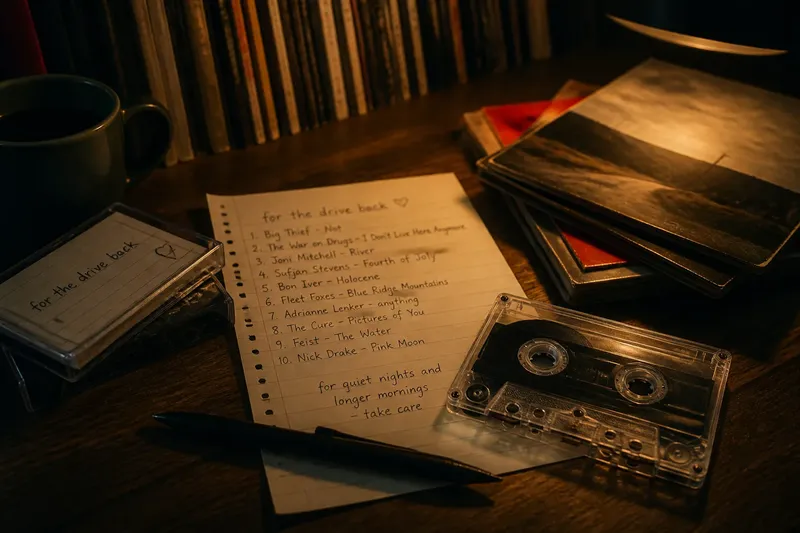
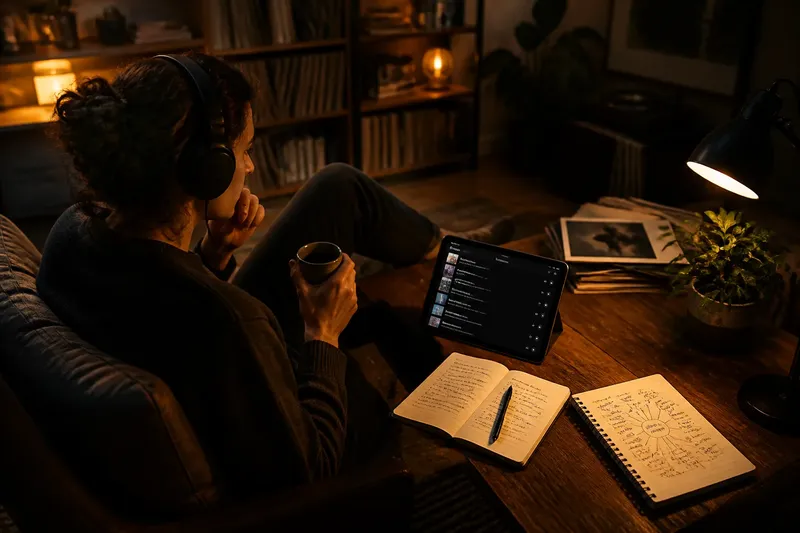
After a session, make a brief note in your phone or on paper. Record the setting, the format, and one thing you noticed. “Album, evening walk: the quieter middle track held my attention” is more useful than a broad verdict such as “albums are better”.
For a playlist, note whether the chosen theme remained useful and where the sequence felt less convincing. You might discover that you prefer a playlist with a gradual change in energy, or that a broad mix suits you better than a tightly controlled mood. Treat those preferences as working clues; they can change with the activity and the day.
These notes can also help you decide whether to edit a playlist. If one transition repeatedly interrupts the kind of listening you want, move a track or remove it. If a track seems more interesting when heard in context, return to its album rather than trying to make the playlist carry every kind of attention at once.
Questions about long listening?
Is an album better for focused listening?
An album’s fixed sequence can make it easier to follow recurring sounds and contrasts across tracks. It does not automatically create focus; choose a setting that leaves you enough room to listen.
When does a playlist suit a long session?
A playlist suits a session when you want to sustain a mood, activity, or personal theme across different tracks. Its usefulness depends on how well the order supports that purpose, so adjust it when the sequence begins to distract you.
Can I listen to an album out of order?
Yes. Starting with one track can be a good way to approach an unfamiliar album, and you can return to the full sequence later if its relationships interest you. The choice changes what you hear first, not whether your listening is valid.
How should I choose when I am tired?
Choose the arrangement that asks less of your attention in that moment. A familiar playlist may offer a settled atmosphere, while a favourite album may feel reassuring as a whole; there is no need to make the session a test of concentration.
Choose by the session
At the end of the week, look over your notes and ask which format made the listening you wanted easier. You may prefer albums when you want to follow one artist’s sequence and playlists when you want to shape a particular atmosphere. The answer can vary from one session to another.
For an album or playlist for a long listen, start with the experience you want rather than a general ranking of formats. Keep the plan loose enough to change when your attention does, and let the music’s arrangement—not an imagined rule about how to listen—guide your next choice.