A One-Album Listening Hour Without Multitasking
A one-album listening hour makes close listening easier: settle in, follow the track sequence and notice what changes when you return to one detail.
The common mistake in a one-album listening hour is treating it as background music while answering messages or tidying a room. The album keeps playing, but its sequence turns into a blur; you may remember a favourite chorus and miss how the quieter track prepared for it. A little attention, not specialist knowledge, is what makes the hour feel complete.
Make room for listening
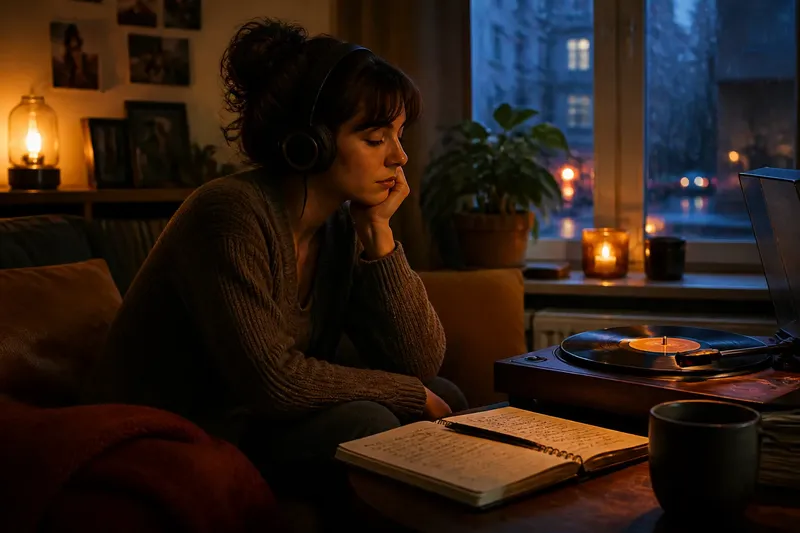
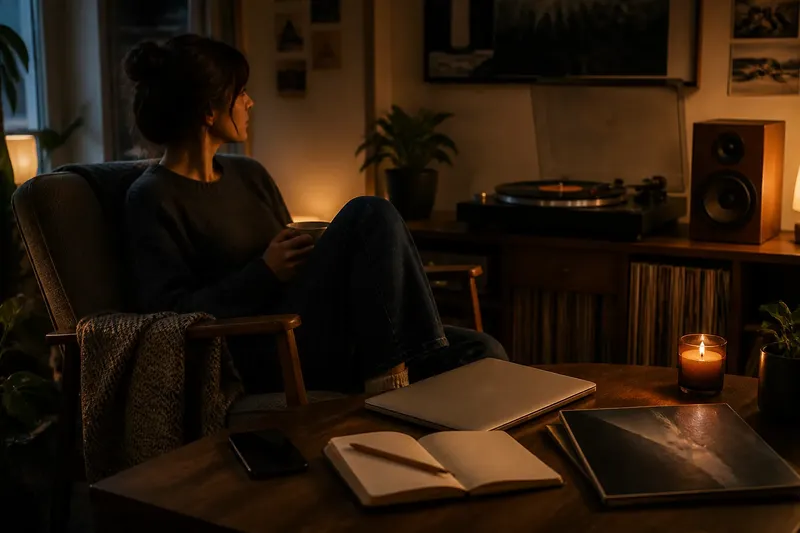
Imagine Mara has set aside an hour at home and chosen an album she knows only by a couple of songs. Her phone is on the table, a half-finished email is open on her laptop, and she is tempted to let the record accompany both. Instead, she decides to make listening the activity rather than one more layer over it.
She chooses a comfortable chair in a room where she can hear the music clearly, closes the laptop, and puts her phone out of reach. If the album is on vinyl, she checks that the turntable and speakers are ready before sitting down; with a CD or a streaming service, she queues the album and turns off autoplay. She keeps a notebook and pencil nearby, but leaves them closed for the opening tracks.
This small arrangement matters because interruptions often begin as tiny invitations: a notification, a search for another record, or a glance at a screen. Removing those prompts is like putting a book on a clear table instead of beneath a stack of post. Mara is not trying to create a perfect listening room; she is making it easy to stay with the music.
Let the sequence work
At the start, Mara listens without writing. She notices the broad shape of the opening: whether the first sound arrives abruptly, whether the voice or instruments take time to appear, and how the next track follows. She does not need to identify every instrument or decide what the album means. Those judgements can wait until she has heard the full sequence.
She lets each track end before reaching for anything. On a streaming service, that means resisting the urge to skip; with a physical format, it means attending to the pause or transition as well as the songs. If the album has a side break, she turns the record or changes the disc calmly, then returns to the chair rather than using the pause to reopen her inbox.
By the middle, Mara notices that a restrained song has made the louder track after it feel more expansive. She does not stop to write the thought down. Holding it loosely lets her hear what comes next, including whether the album develops that contrast or moves somewhere else.
Choose one detail
When the final track ends, Mara waits a moment before deciding what stood out. She opens her notebook and writes a short observation: “The low backing voice becomes easier to hear after the sparse middle track.” That is more useful than a general verdict such as “good album”, because it names something she can listen for again.
She then returns to the relevant track, or to a short passage if the format allows, and listens once more. On this second pass, the backing voice is still present, but she hears how it answers the lead rather than merely filling space. The detail has changed: first it seemed like a background texture; now it sounds like part of the conversation between voices.
This is the hour’s small result, not a claim that every album yields a hidden meaning. Mara has heard the record in order, noticed one relationship between its parts, and made a note she can revisit. If the second listen reveals no change, that is a useful observation too; she can keep the note plain rather than forcing an interpretation.
Questions for a listening hour?
How do I choose an album?
Pick a record that fits the time and attention you have, not one you feel obliged to admire. An album you know slightly can be a good choice because familiar songs leave room to notice their neighbours.
Should I read the lyrics first?
For this kind of listening hour, it can help to hear the vocal phrasing before reading the words. If a line catches your attention, note it and check the lyrics afterwards, so the page does not compete with the sound.
What if I get distracted?
Notice the interruption, deal with anything that genuinely needs attention, then return to the track that is playing. There is no need to restart the album or scold yourself; the point is to resume listening deliberately.
Is a second full play necessary?
No. Mara’s second pass is brief and focused on one detail, which keeps the first listen intact. A full replay may suit another day, but it is not required for a one-album listening hour.
Keep the note useful
A listening note works best when it records something audible: a change in rhythm, a repeated phrase, a sound that moves forward in the mix, or a transition that alters the mood. A few words are enough. The note is a prompt for attention, not a review that has to persuade anyone.
For a one-album listening hour, the useful measure is not how many details Mara can collect. It is whether she can return to one moment with a clearer sense of what she heard and where it sat in the sequence. Next time, she might choose a different album and a different kind of detail, while keeping the room, the uninterrupted first pass and the patient second listen simple.